Bots Now Outnumber Humans Online. We Built for the Wrong Half.
Cloudflare confirms bots have overtaken humans in web traffic. The real story: AI agents will soon handle more commerce than people. Are you building for them?
Bots just became the majority on the internet.
For the first time in history, automated traffic has surpassed human traffic on the web. Cloudflare's latest data shows that 57.5% of HTTP requests to HTML pages are now from bots. In the United States, it is 71.5%.
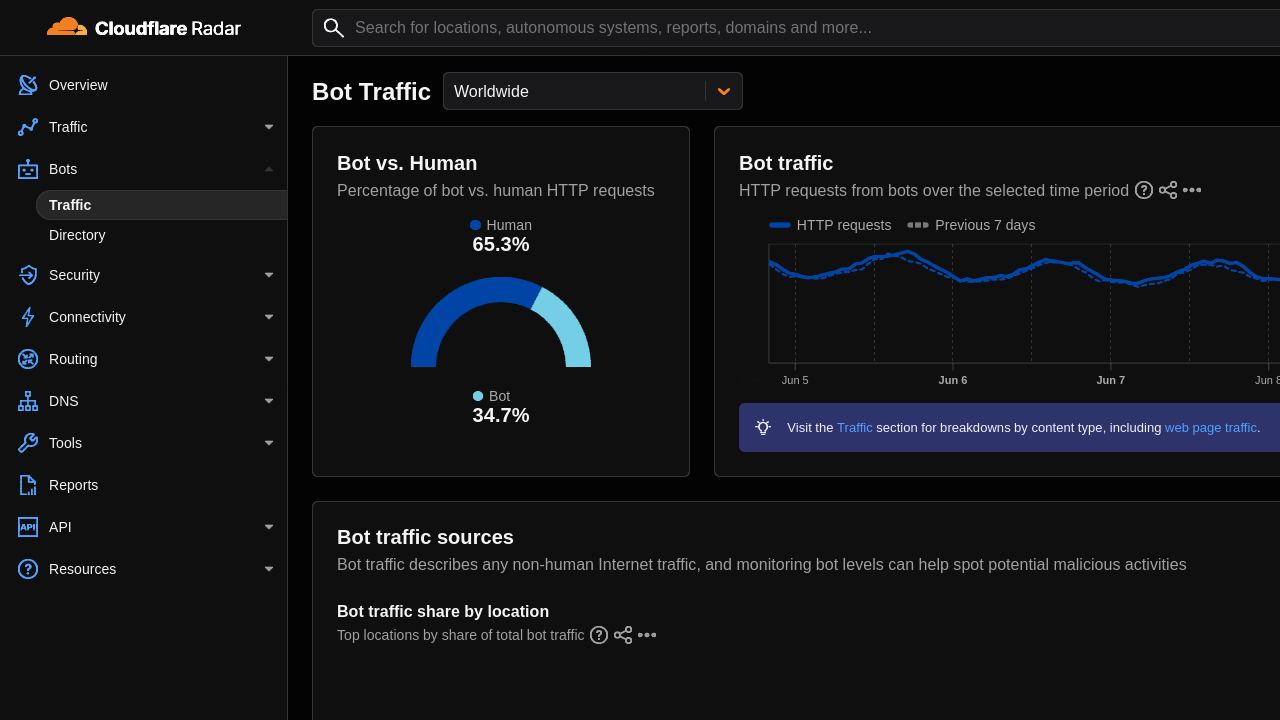
Cloudflare CEO Matthew Prince predicted this would happen by 2027. Speaking at SXSW earlier this year, he laid out the trajectory. It arrived a full year ahead of schedule.
The Chatbot Scraping Arms Race
Most of the coverage has been predictable. Headlines about scraping. AI training data. The "attack surface" expanding. Security implications.
That is all real. A human shopping for a product might visit five websites. An AI agent performing the same task can query 5,000. The asymmetry is staggering.
But I think we are missing the bigger story.
The Commerce Shift Nobody Is Talking About
In the next five years, AI agents will be spending more money on the internet than people.
Not browsing. Spending.
Agent-to-agent commerce is not science fiction. It is already happening in narrow domains. Programmatic ad buying. Algorithmic trading. Supply chain automation. What is changing is the scope. When every transaction layer is mediated by agents that price, negotiate, and execute without a human in the loop, the definition of "customer" shifts.
We do not have the infrastructure for this yet.
The question nobody is asking: how do you market and sell to an agent?
What Structured Data Tells Us About the Future
This is not theoretical. I have been watching something happen in real time.
Over the past few months, JSON-LD structured data has been the single highest-leverage driver of traffic for client websites I work with. Not blog posts. Not social media. Structured data markup.
At first, this looks like an SEO win. Better rich snippets in Google results mean better click-through rates. Standard marketing math.
But that is not what is happening.
What I am seeing is bots crawling structured data endpoints directly. AI systems that parse JSON-LD blocks as their primary interface to a website. They do not read your hero section. They do not care about your brand voice. They are looking for machine-readable signals about what you do, what things cost, and when they are available.
When I wrote about building multi-agent AI stacks on commodity hardware, the core insight was about controlling the pipeline end to end. This is the same problem from the other side. If you are building for humans but your traffic is coming through agents, you are optimizing the wrong signal path.
The Web Is Bifurcating
There are two internets forming. One for humans, one for agents.
The human web has visual design, brand storytelling, social proof. It is built on persuasion and trust signals that evolved over decades of e-commerce.
The agent web runs on structured data. Schema markup. APIs. Machine-readable product catalogs with real-time inventory. It needs clean signals, not persuasion.
Most businesses are still building exclusively for the human web. They treat bot traffic as a nuisance to be managed, not a customer segment to be served. If you need a marketing audit that checks your structured data readiness, I built a free tool for exactly this.
That is going to be expensive to fix later.
Why I Do Not Love Markdown
This is also why I have been skeptical about the markdown-everywhere approach a lot of AI tools are pushing.
Markdown is great for humans. It is readable, writable, portable. But it is structurally ambiguous. An H2 heading in markdown does not tell a machine whether it is a product category or a section divider. A list could be features, pricing tiers, or related articles. The ambiguity that makes markdown pleasant to write is exactly what makes it expensive for agents to parse at scale.
JSON-LD does not have this problem. Schema.org vocabulary gives you explicit semantics. A Product type is a product. An Offer has a price and availability. An Organization has a name, logo, and contact point. There is no guessing.
Structured data is the sales pitch to machines. It says: here is what I am, here is what I cost, here is how you transact with me. When I talked about MCP servers connecting AI to everything marketers use, the underlying principle was the same. Standardized interfaces win.
What to Build
If you accept the premise that agents will be the majority customer in five years, the infrastructure checklist changes.
First, treat structured data as a product surface, not an SEO afterthought. Your JSON-LD blocks should be as carefully designed as your landing page hero. They are the storefront agents see.
Second, build agent-aware APIs. If a bot cannot query your pricing and availability without scraping HTML, you are already behind. Products like AI lead magnets that qualify as they chat are early examples of what agent-facing interfaces look like.
Third, stop thinking of bot traffic as a cost center. The agentic mix strategy applies here too. Diversify how you serve different consumers of your data.
Fourth, separate your content stack. The human-facing blog and the machine-readable structured data should be parallel tracks that stay in sync. Not one as an afterthought of the other.
Fifth, recognize that marketing operations is the bridge. The person who connects structured data to CRM to fulfillment pipeline is building the scaffolding agents will transact on.
The Clock Is Running
Cloudflare's data confirms the crossing. Bots are now the majority on the web. Matthew Prince's timeline was optimistic.
The infrastructure to market and sell to agents does not exist at scale yet. That is a window. The businesses that build it first will own the agent-to-agent commerce layer the way Amazon owned e-commerce logistics in the 2010s. If you want help thinking through what this means for your business, get in touch.
The web flipped. I have been building automation infrastructure that bridges human and agent-facing systems. The question is whether your business notices.